
Before we called them drones.
From camera model airplanes to hand-built multicopters: my learning story, first flights and aerial photography in Menorca since 2007.
Explore the story · 14 chapters
The dream of flying began much earlier than we imagined
Today it is common to look up and discover a drone flying over a landscape, a construction or a boat. They are compact, sophisticated and relatively easy to handle aircraft. Simply turn them on, wait for their systems to finish checking, and take off. But there was a time when nothing was like that.
A time when flying a camera required much more than purchasing an aircraft. You had to imagine it, build it, understand its electronics, solve mechanical problems and assume that any small mistake could end weeks of work. To understand how we got here, we must go back more than a century, long before the word drone was part of our everyday vocabulary.
1907: the first steps of a revolutionary idea
Although many people consider multicopters a recent technology, their principles date back to the beginnings of aviation. In 1907, French brothers Louis and Jacques Breguet, with the collaboration of Professor Charles Richet, developed the Breguet-Richet Gyroplane No. 1, one of the first experimental aircraft to use four sets of rotors to generate vertical lift.
It was an extraordinarily complex machine for its time. Its metal structure, combustion engine and large rotors represented an attempt to solve one of the biggest challenges in aeronautics: lifting a machine off the ground without needing a take-off runway. The device managed to rise with one person on board, but needed other people to hold it to maintain its position. That was very far from controlled and autonomous flight in terms of stability.
However, the fundamental idea was already present: to use several rotors to keep an aircraft in the air. In 1922, engineer George de Bothezat developed another extraordinary four-rotor device for the US Army. That large structure, known as the Bothezat helicopter, managed to carry out experimental flights at McCook Field, Ohio.
Its operation required considerable pilot intervention and complex control mechanisms. The power, weight and limitations of the technology at that time made it extremely difficult to achieve practical flights. Shortly afterwards, in France, Étienne Œhmichen developed another experimental multi-propeller machine. In 1924, his Oehmichen No. 2 managed to complete a one-kilometer closed-circuit route, a historic milestone for vertical takeoff aircraft.
Decades later, in 1956, the Convertawings Model A appeared, developed in the United States with David H. Kaplan as one of its main protagonists. It used four rotors and two engines, and introduced solutions that allowed the aircraft to be controlled by modifying the thrust of its rotors. Although it showed that the concept could work, it did not become a commercial success.
For decades, multicopters were mainly relegated to research and experimentation. The idea was good, but something decisive was missing: electronics small enough, fast and precise enough to automatically maintain stability.

The electronic revolution: when multicopters became possible
The real change came with the development of microprocessors, electronic sensors, brushless electric motors, variable speed drives and lithium polymer batteries. For the first time, it was possible to build relatively light aircraft capable of continuously correcting their position using an electronic controller.
This technology made it possible to replace many of the complex mechanisms used in large experimental multicopters with systems that electronically regulated the speed of each motor. In the mid-2000s, communities of hobbyists, engineers, and developers began to emerge and share their knowledge over the Internet. Projects such as MikroKopter, introduced in 2006 by Holger Buss and Ingo Busker, helped launch a new generation of multicopters.
However, that was still not a technology available to everyone. There was no current concept of buying a drone, taking it out of a box and starting filming. It had to be built. And precisely at that moment my own story began.
2007: my first multicopters in Menorca
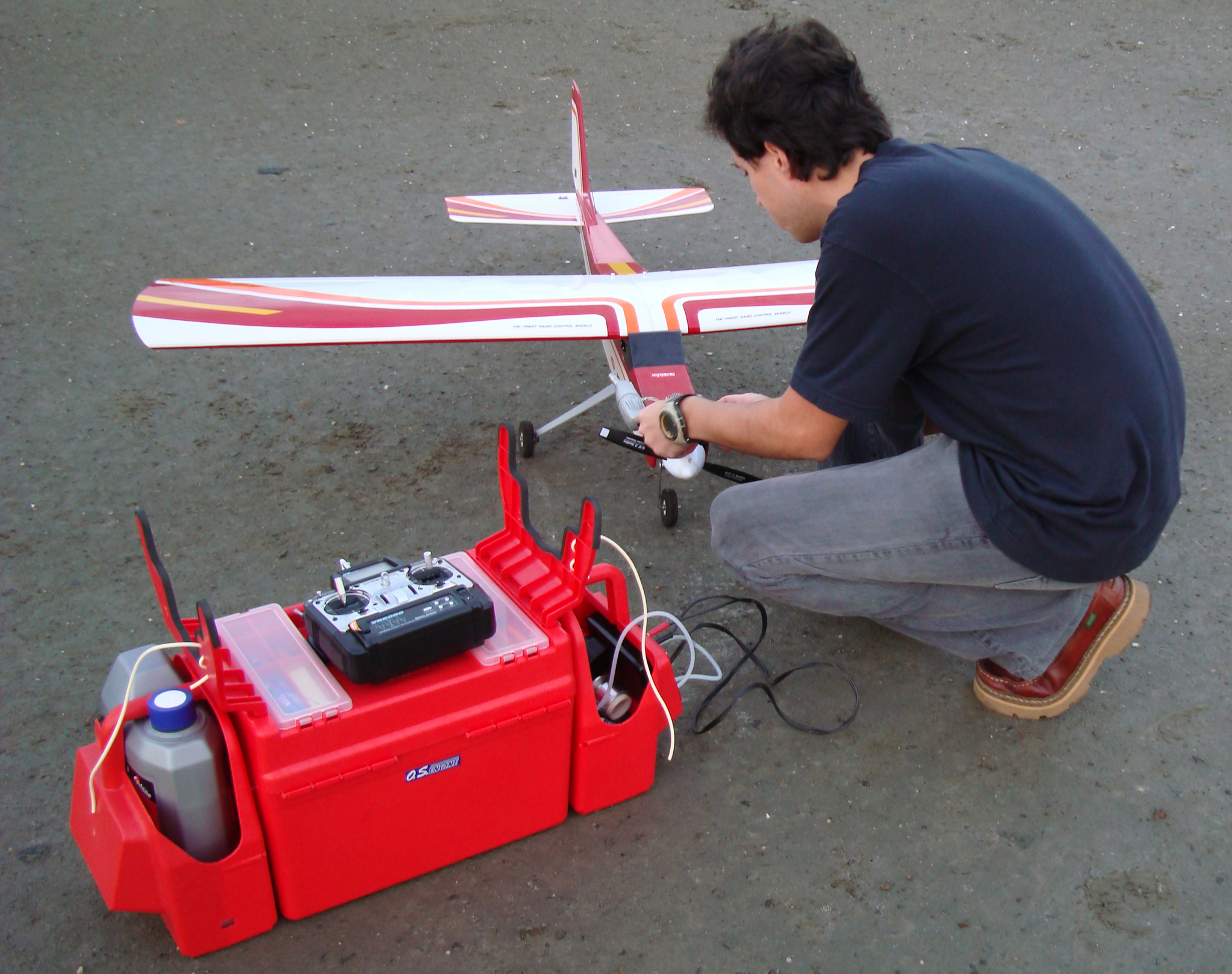
My relationship with radio-controlled aircraft began with model airplanes and remote-controlled airplanes. I had always been passionate about the possibility of flying, but I also wanted to discover what it would be like to observe the world from the aircraft itself. I was not satisfied with watching her evolve in the sky. I wanted to see what she saw. In 2007 I started experimenting with multicopters at the Menorca Aeroclub. Back then, finding information was an adventure in itself.
Much of my knowledge came from American technical pages, specialized forums and experiences shared by small groups of fans from other countries. It was completely self-taught learning. There were no definitive manuals or ready-made solutions for all problems. I had to understand how each component worked and figure out why sometimes something that looked right on a table stopped working as soon as the aircraft began to lift.
Each advance opened a new difficulty. And each difficulty involved hours of research, testing and modifications.
Building a multicopter was much more than mounting four engines
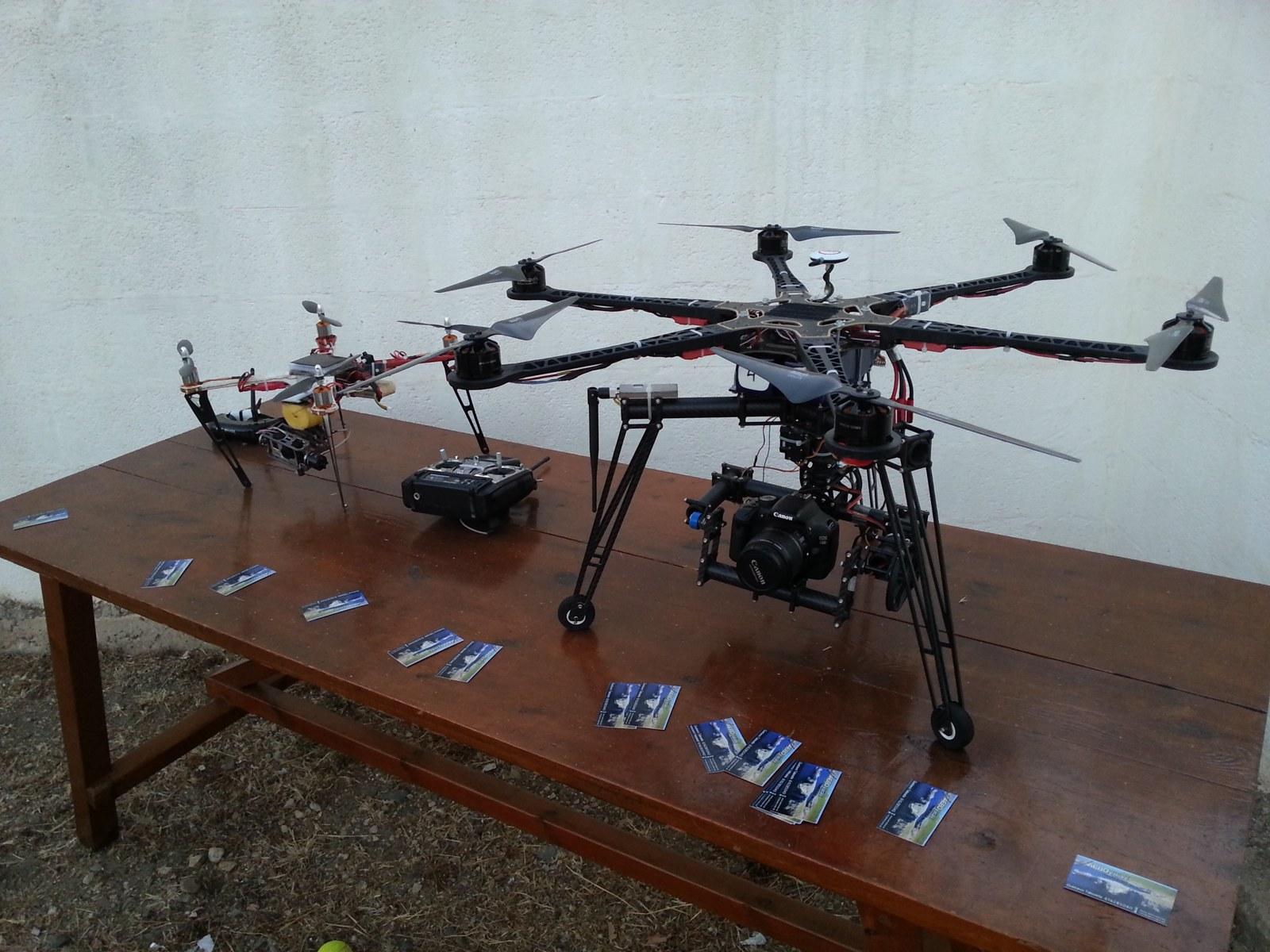
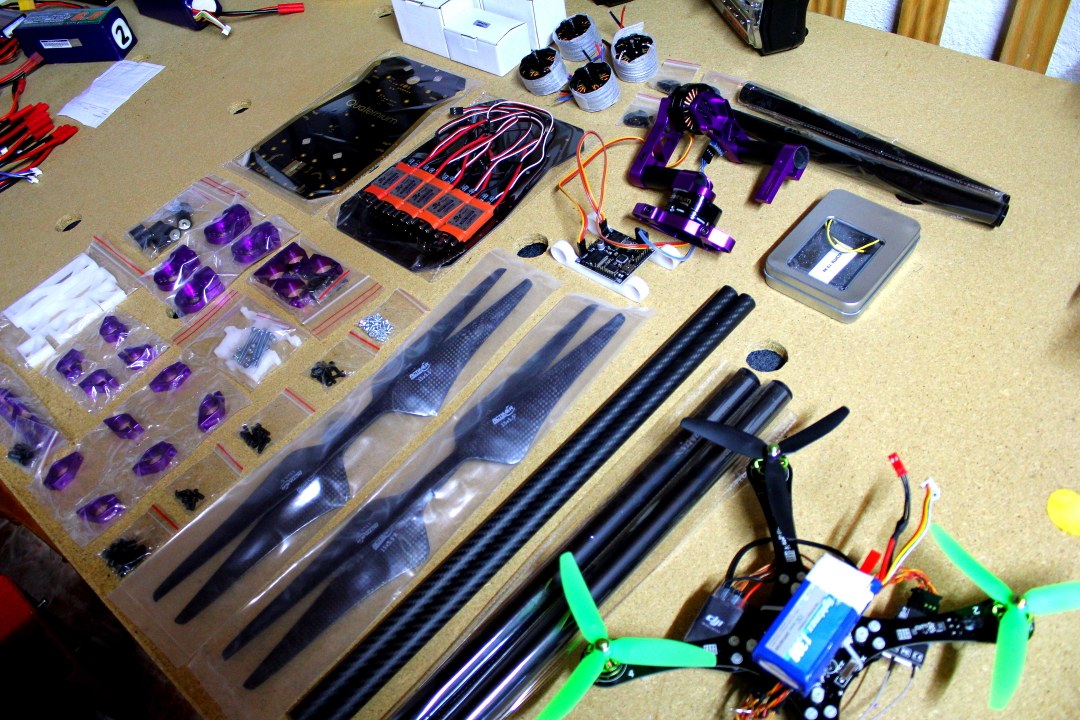
To understand what it meant to fly those first aircraft, you have to remember that practically everything had to be selected, adapted and configured separately. First there was the structure. Its dimensions, weight, resistance and distribution of components had to be decided. Excess weight could compromise the flight; a structure that was too weak could end up destroyed in the first rough landing. Next came the electric motors, drives and propellers.
It was not enough to find pieces that apparently fit. It was necessary to check that the engines offered sufficient thrust, that the drives could withstand consumption and that the propellers were suitable for the chosen configuration. The propellers had to be carefully balanced. A small vibration could affect the sensors, destabilize the flight and ruin any attempt to obtain usable images. Then came the electronic work.
Welding, power supply, connections, receivers, transmitters and flight controllers. Sensors had to be configured, parameters adjusted, the direction of rotation of each motor checked and incompatibilities resolved between components that had not always been designed to work together. Programming and configuring the electronics were a fundamental part of the process.
He also experimented with electronic memories, communications, frequencies and transmission systems. He had to pay special attention to possible interference between the radio signal that controlled the aircraft and the video signal that had to return to the ground. In many of those first installations there was no GPS or the positioning systems that we consider normal today. The aircraft did not remain stationary on its own as many modern drones do.
It had to be piloted constantly, correcting its position, compensating for the wind and anticipating its movements. And in Menorca, where the wind is an inseparable part of the landscape, that posed an added challenge.
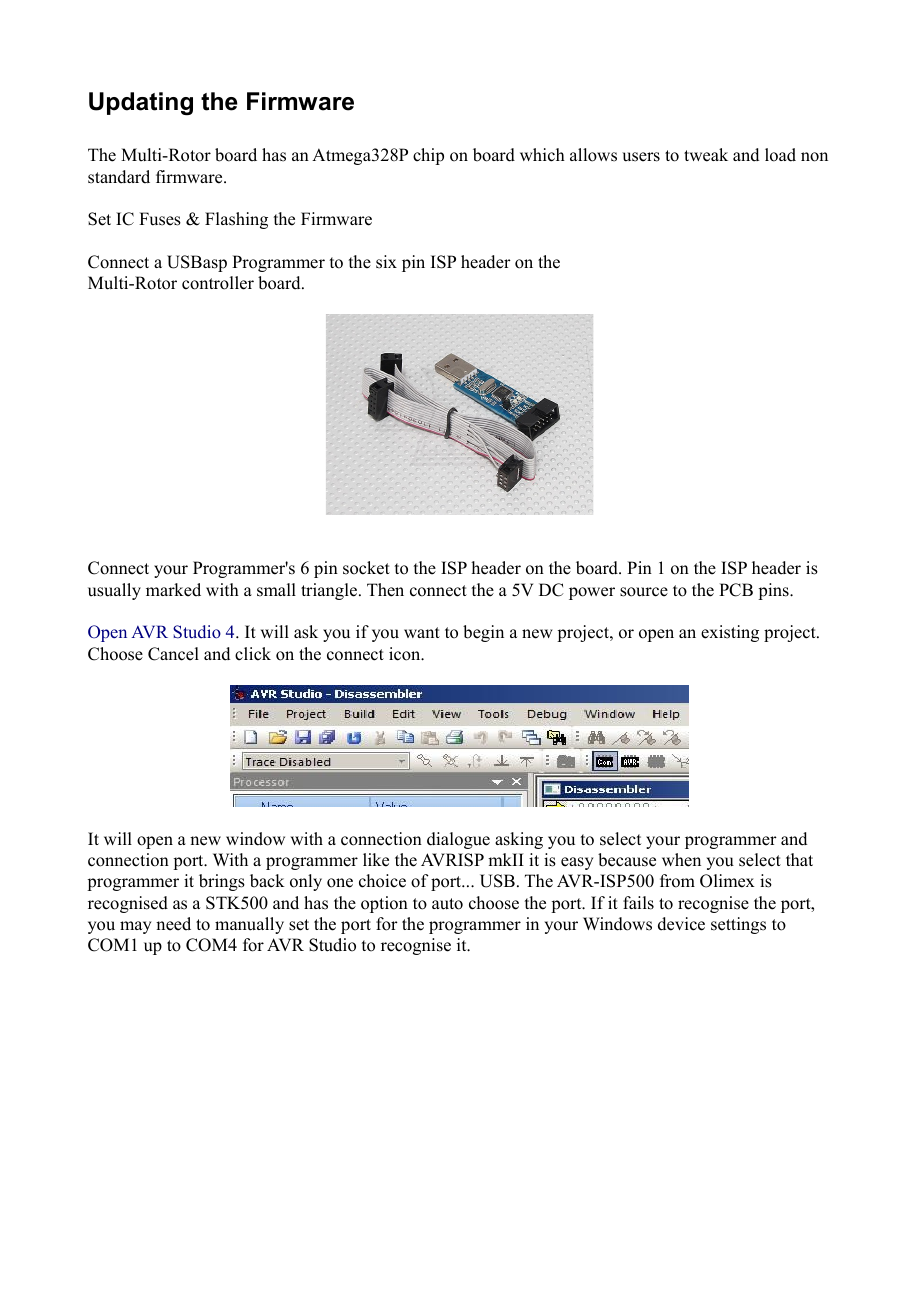
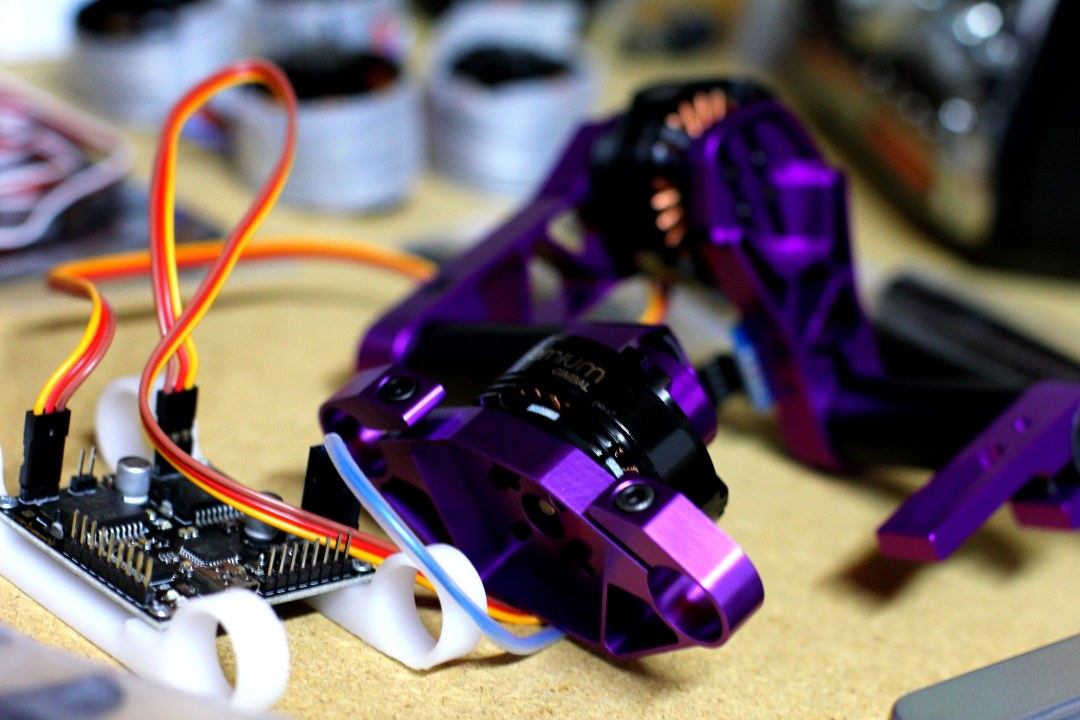
The KK controller manuals that I keep show another part of that learning: connecting a USBasp programmer to the ISP port and loading firmware into the flash memory of an ATmega microcontroller. The controller interpreted the sensors and sent the orders to the drives, in charge of regulating the motors. Adjusting the program and response of each component was part of the fine-tuning work; it was not an automatic update from a mobile app.
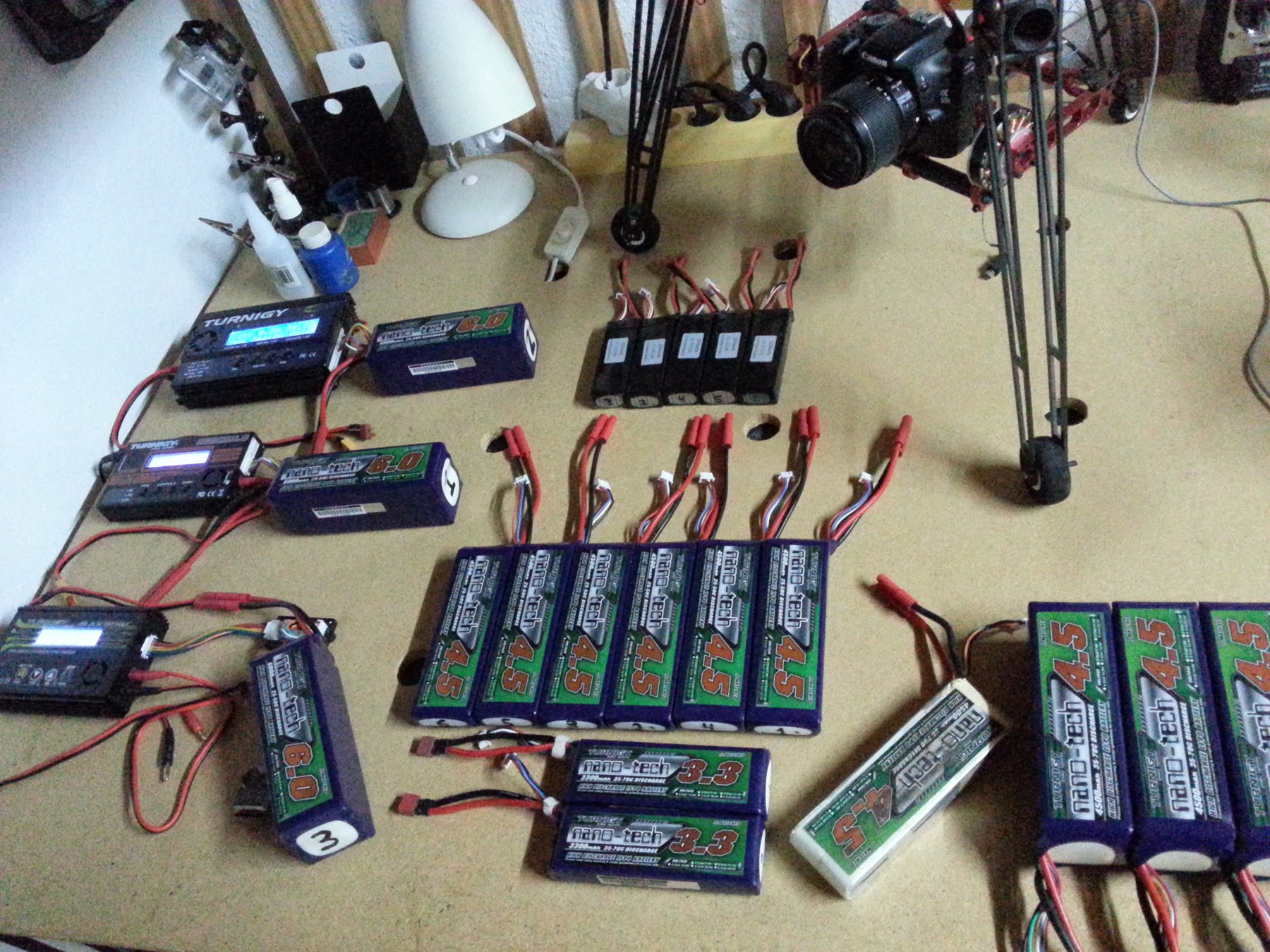
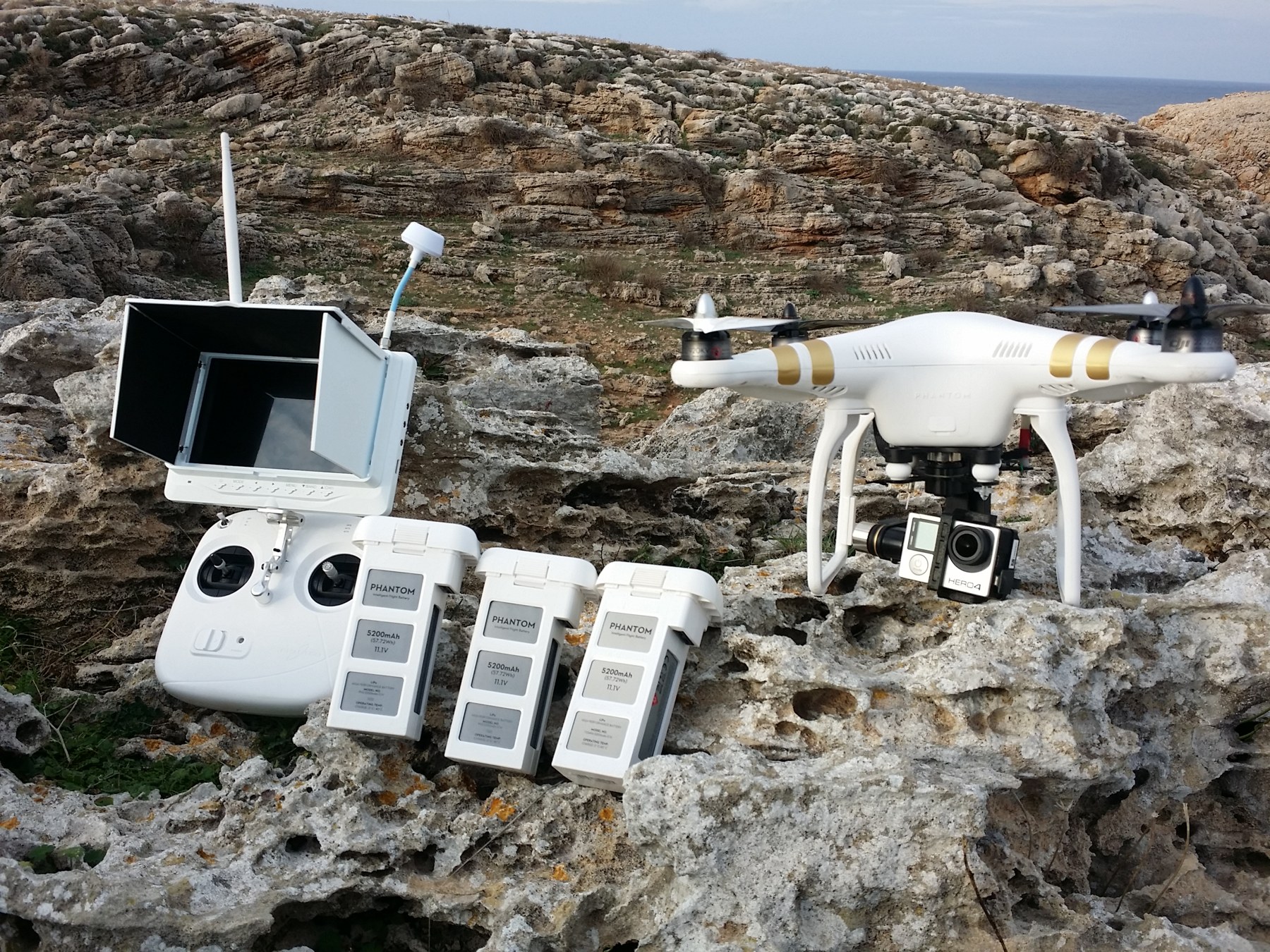
Preparation continued on the ground with the batteries and chargers. Each team carried its own combination of packs, connections and power, and the set had to be checked before going out to work. The photograph from December 2013 preserves that part of the workshop, less visible than the flight but essential to sustain a day of tests or photography.
The challenge of placing a camera in the sky
My interest was not only in getting a machine to fly. As a photographer and passionate about images, what really fascinated me was the possibility of discovering new perspectives. But adding a camera complicated things even more. It was necessary to find sufficiently light capture systems, adapt supports and ensure that the vibrations of the motors were not transmitted directly to the image.
I even took advantage of small components and cameras from old Vodafone phones that were no longer used. Everything could become experimental material. Early camera stabilization systems required numerous adjustments. The mechanisms that we know today as gimbals did not then have the integration or precision that current equipment offers. Solutions had to be tested, movements corrected, supports modified and started again.
Then came another challenge: transmitting the images in real time to a screen located on the ground. What we today call FPV – First Person View – allowed us to contemplate the landscape from the perspective of the aircraft. The first time you get something like this, after having built and configured everything with your own hands, the feeling is difficult to explain. Suddenly, you're no longer looking at a little machine in the sky. You are contemplating the world from it.
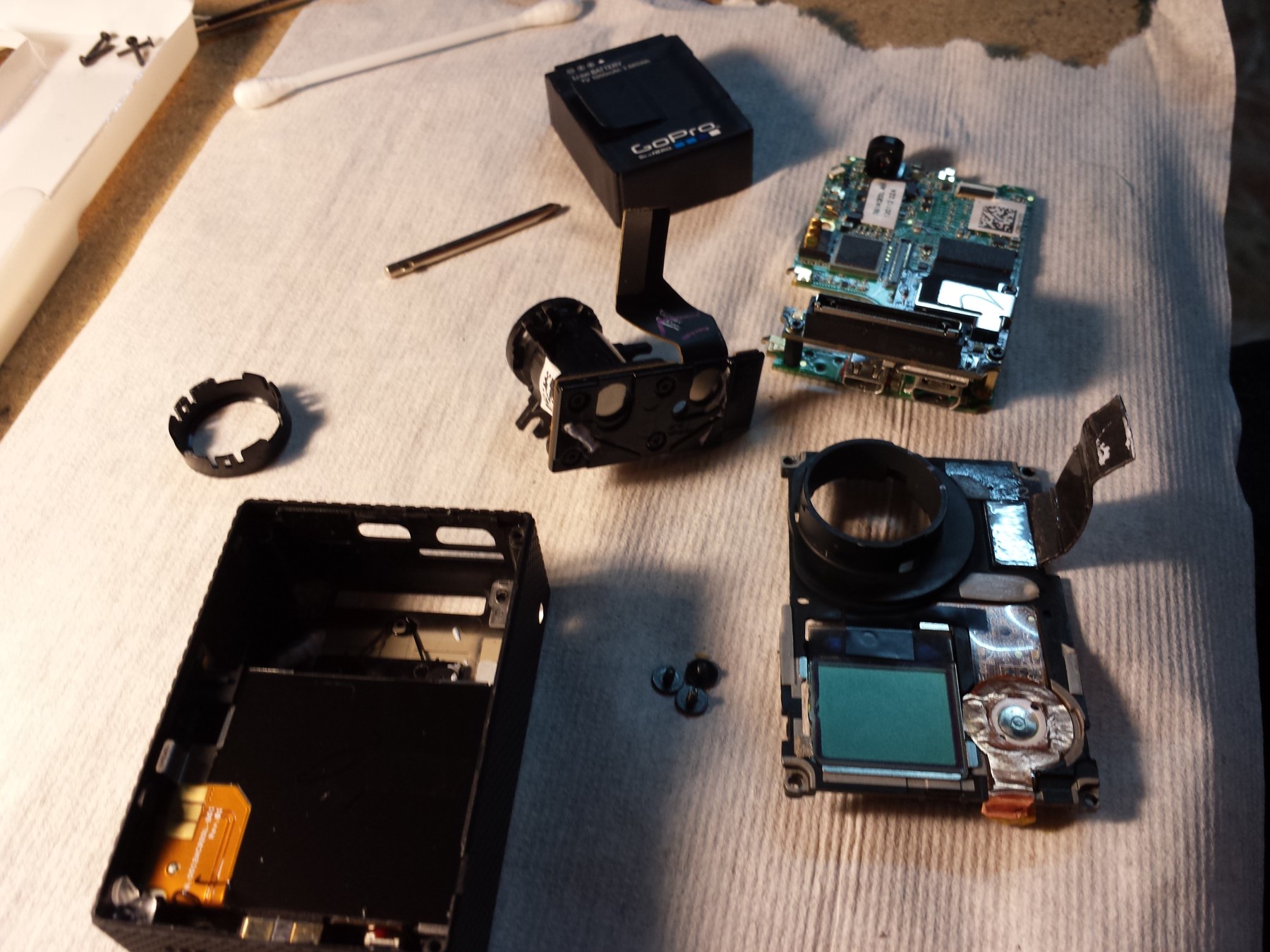
I also disassembled GoPro cameras to lighten them and adapt them to the mounts. Reducing the weight that the aircraft had to lift required studying which components were necessary for the capture and how to house them without compromising their operation. The camera, its support and the power supply were thought of as parts of the same system.
The nights of the Menorca Aeroclub: an experience that is difficult to forget
I have especially intense memories of those days of experimentation at the Menorca Aeroclub. We spent hours doing tests, adjustments and small flights. Sometimes a problem that seemed insignificant forced us to spend practically the entire day finding a solution. But there were also extraordinary moments.
I remember those experimental night flights carried out with a flight instructor, when we used the flying club runway to test the video transmission and telemetry systems. On some occasions, a car illuminated the track with its headlights while we carried out operations. The aircraft transmitted images and instrumental information, and from the screen we could see the lights of Maó, Es Castell and Sant Lluís.
It was a completely different experience than anything I had known until then. We were not simply observing a radio-controlled aircraft. We were discovering another way to see Menorca. In those meetings five, eight or ten people could gather around us, fascinated by what they were seeing. There were questions, comments, surprise and a shared emotion that I still remember with great affection.
Those experiences belong to a pioneering stage, with a technology and operational context very different from those of today. Today flights must be planned in accordance with much more developed regulations and safety requirements. But the memory of those first images is still special.
When the police and the Civil Guard approached out of curiosity
One of the things that has changed the most over the years is people's reaction to the presence of a drone. In those early days, most people didn't even know what to call those machines. Some people stopped to watch them. Others approached directly to where I was with the station and the screen.
I remember police and Civil Guard agents approaching to ask what that was, how it worked and how I could control an aircraft while receiving live images. The screen was almost always what aroused the most curiosity. They were surprised to discover that they could see from the ground what the camera installed on the multicopter was seeing. The questions arose one after another.
How high can it go? How far can you go? How do you bring him back? How long does the battery last? How do you receive the images? What happens if you lose the signal? For me, explaining all that was part of the same passion. He not only enjoyed building and flying; I also liked to share what I was learning. There was a collective fascination with a technology that had not yet entered everyday life.
At many times, after a flight, people came up to congratulate us. There was enthusiasm, smiles and even hugs. We were witnesses of a technology that was beginning to transform our way of looking at the world, although we were not yet fully aware of how far it would go.
The day an aircraft disappeared or broke down
But that time also had a much more bitter side. And it's possibly one of the things I understand best now, seeing how much this technology has evolved. Losing a multicopter in those years didn't just mean losing money. It meant losing a machine that you had invested weeks of work into. Each aircraft had something of you.
You had chosen its engines, assembled its structure, soldered its connections, adjusted its electronics, configured its control system and corrected dozens of small problems. You knew every piece. You remembered the difficulties you had had in getting it to work. You knew which screw you had changed, which connection you had repaired, and how many tests had been necessary to achieve stable flight. And then, suddenly, something could go wrong.
An interference, an electronic problem, a loss of signal, a power failure or any unexpected circumstance could end everything. I lost three aircraft that I never managed to recover. I also suffered accidents with other equipment that I was able to recover, dismantle and rebuild using the parts that still worked. I perfectly remember that bitter feeling when one of those machines disappeared. It was like something of myself was ripped away from me. It was not only the economic value.
It was thinking about all those hours of effort, the nights searching for information, the tests carried out and the hope I had placed in getting that aircraft to fly. When it was lost, you couldn't just walk into a store and buy another one just like it. We had to start over. Search for components, order them, wait to receive them, assemble the structure, weld, configure, balance and return to the flying field. Again. And yet, he did it.
Because the satisfaction of achieving it surpassed, time and time again, the frustration of failures.
From fascination to suspicion
With the popularization of drones, the social perception of these aircraft also began to change. Those machines that initially aroused curiosity began to generate, in certain circumstances, distrust and rejection. The presence of a camera in the sky raised questions about privacy, security and possible misuse.
I understand that these concerns exist and should be taken seriously. The responsible operation of an aircraft requires respect for people, their privacy and airspace. However, I also experienced unpleasant situations. People protesting simply to see a multicopter, discussions and notifications to the authorities. I even suffered threats in situations that had nothing to do with that curiosity and admiration of the first years.
It was difficult to assume that a technology that had cost me so much effort to learn could provoke such different reactions. It was a curious transition: from having to explain what a multicopter was to having to explain why I was using it. Even so, I never lost sight of something fundamental: flying is a responsibility, and truly knowing the machine you are piloting is part of that responsibility.
2013: when everything started to change
The industry ended up completely transforming our way of using these aircraft. One of the most representative milestones was the arrival of the DJI Phantom to the consumer market in 2013. This equipment greatly facilitated access to multirotor flight by integrating control, positioning systems and functions that previously required specialized technical knowledge.
The first Phantoms did not necessarily have an integrated camera. In the equipment that I have in this photograph, a GoPro had to be installed on an external support and prepared to mount it to record from the air. Flight control was solved in a commercial aircraft, but the audiovisual part still required adapting and adjusting components separately.
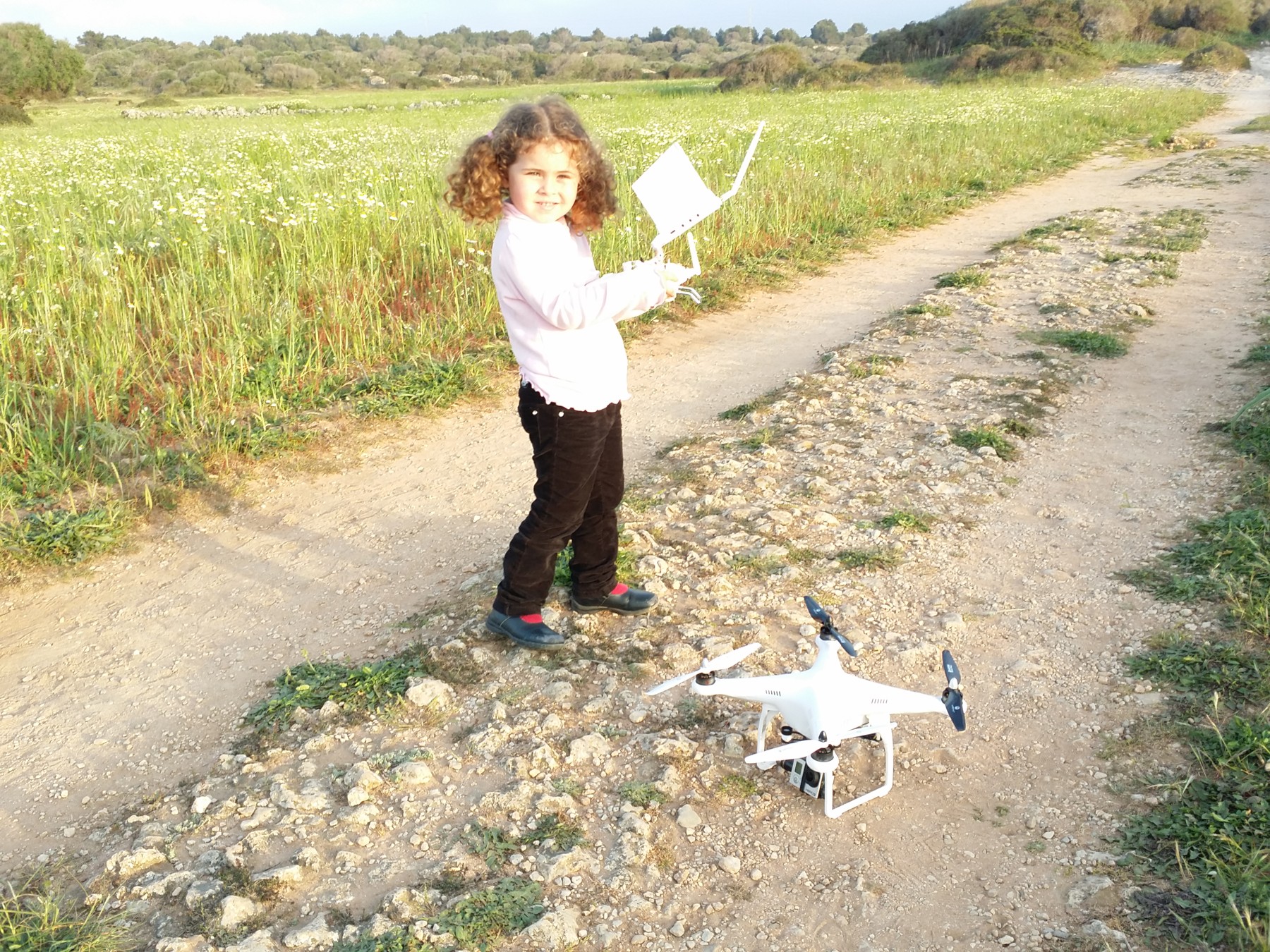
My hobby was also part of family moments. In this photograph, my four-year-old daughter Arianne holds the control of one of those drones: a reminder of how the curiosity to fly was present in our daily lives.
Over time, better batteries, high-resolution cameras, three-axis stabilizers, digital video transmission, more precise positioning systems, anti-collision sensors and numerous piloting aids arrived. Multicopters became smaller, more reliable and more affordable. Today a person can purchase a drone and obtain, with adequate preparation, images that years ago required large investments in time, knowledge and equipment.
Aerial photography and video stopped being something exceptional and became common tools within numerous professional sectors. Architecture, real estate, technical inspections, cartography, agriculture, emergencies, cinema, television and heritage documentation are just some of its applications.
Autonomy continues to be one of its technical conditions, although efficiency improvements allow flights of several tens of minutes, with great differences depending on the type of aircraft, the battery and the load transported.
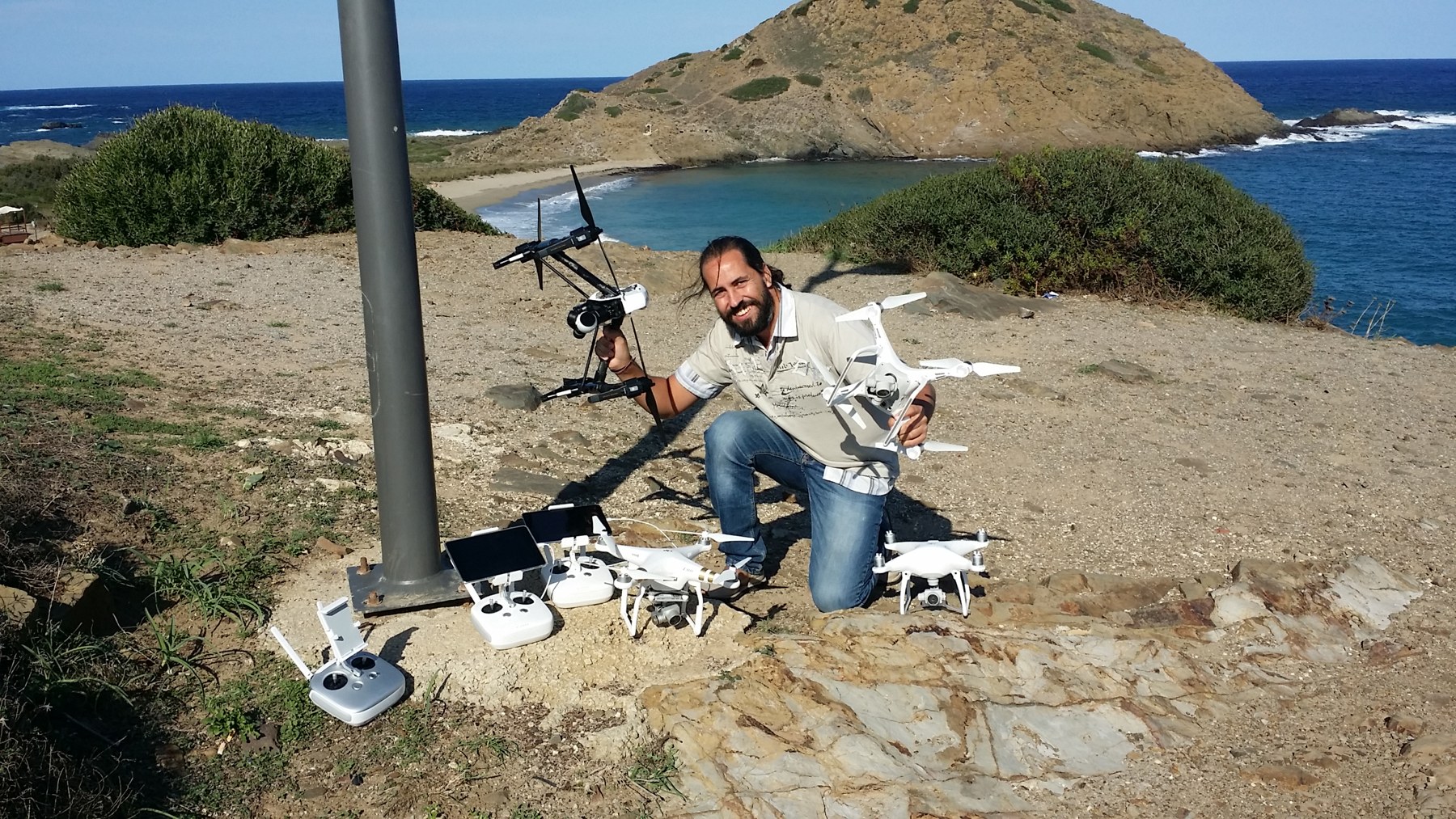
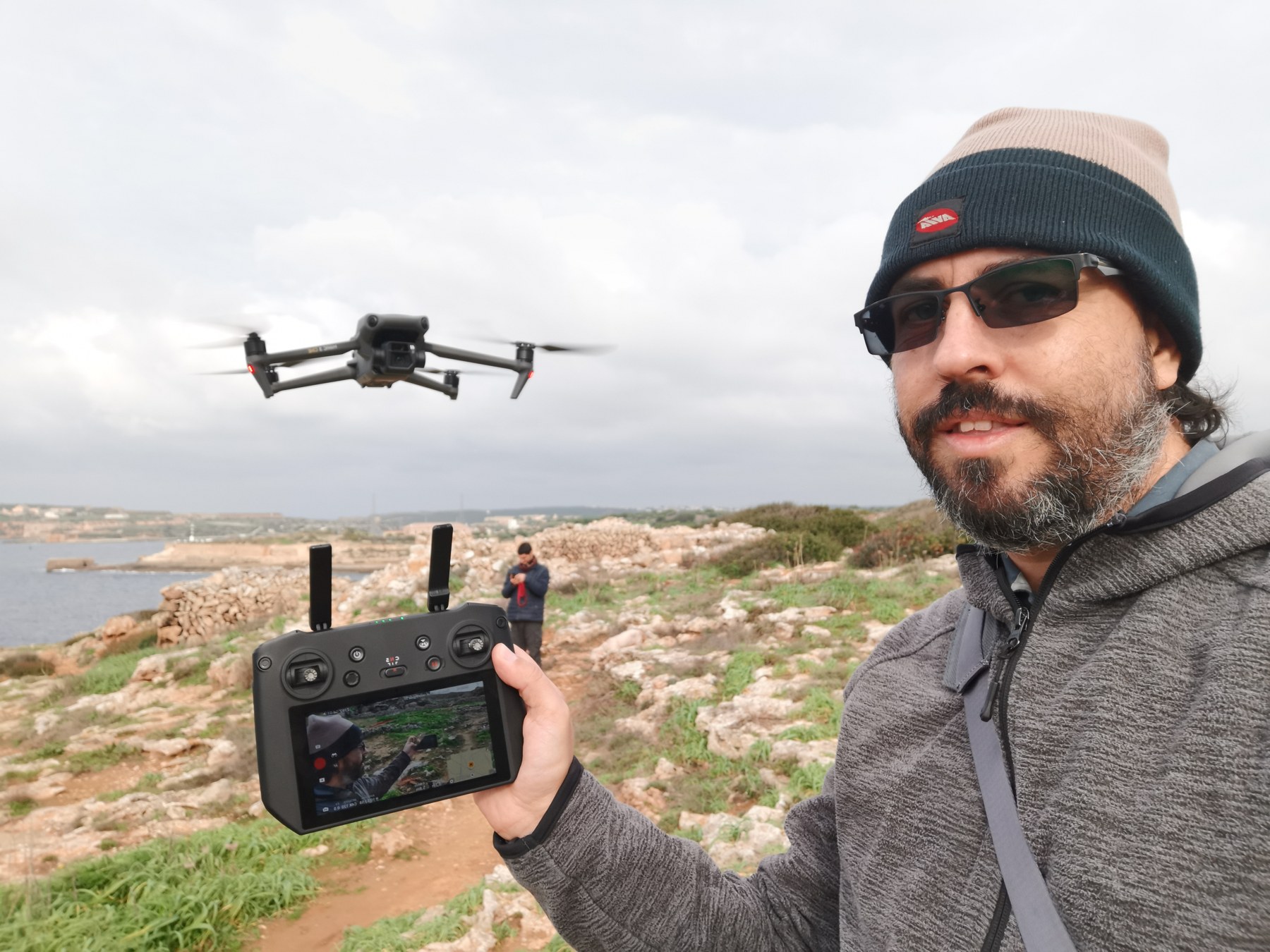
With the arrival of commercial equipment, I incorporated aircraft such as the DJI Inspire, the Phantom 3 and the Phantom 4. The photograph and video from October 2016 show that transition: integrated systems that simplified much of the assembly and configuration that I previously did piece by piece. Later came the Mavic 3 Cine, whose premiere I preserve in a photograph from December 2021. The ease of preparation had changed enormously, although the work still required judgment, planning and knowledge of the aircraft.
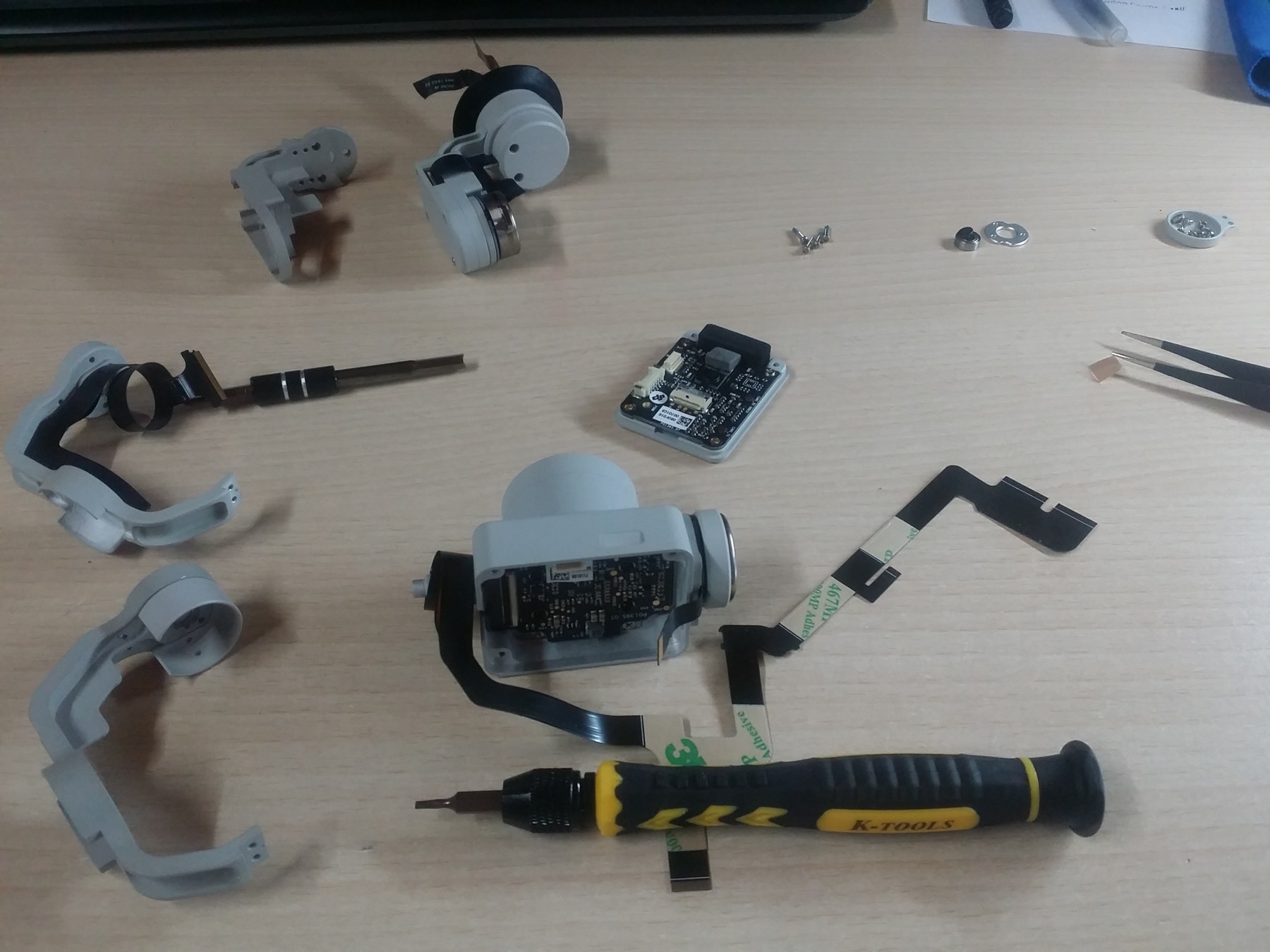
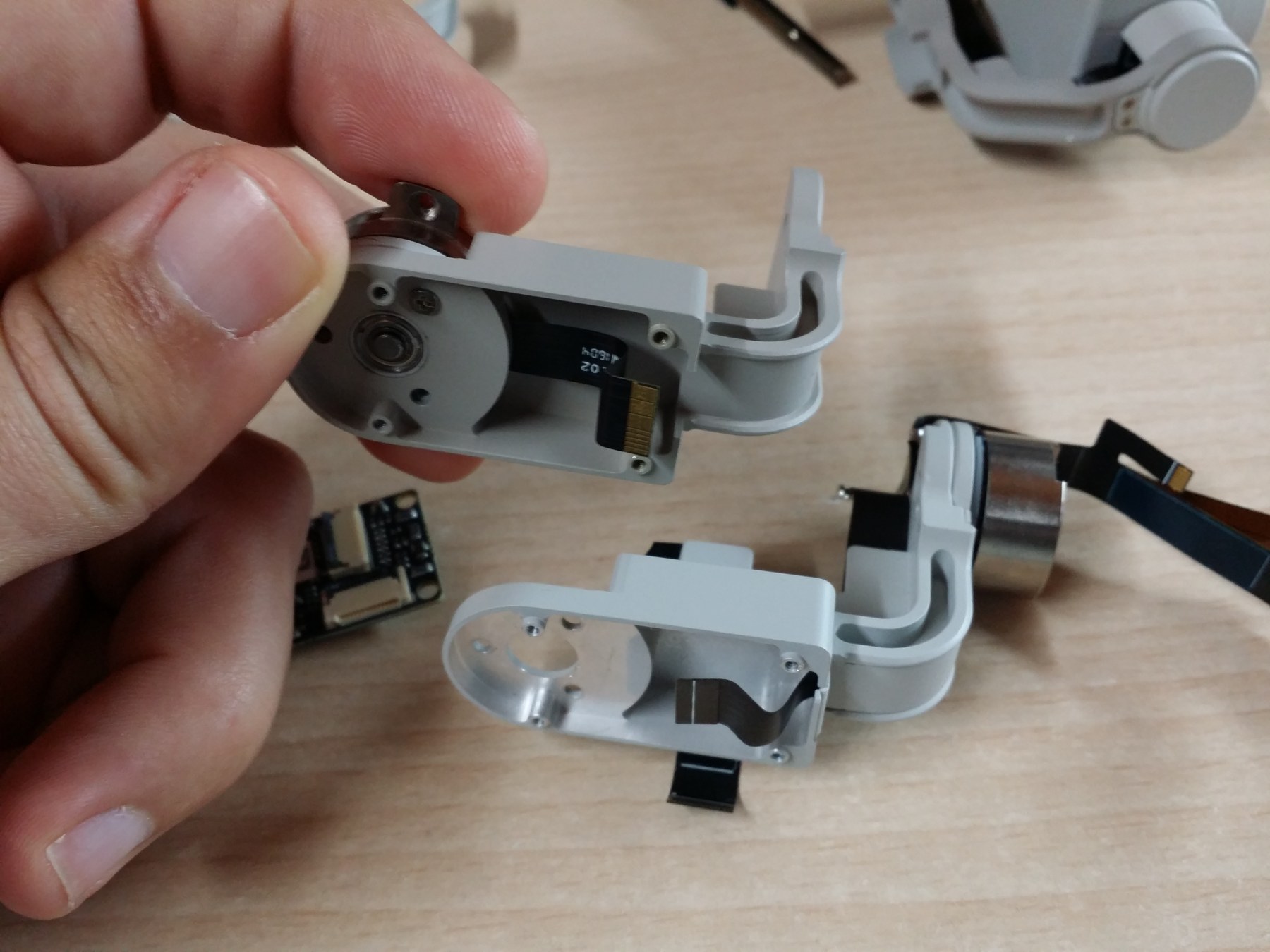
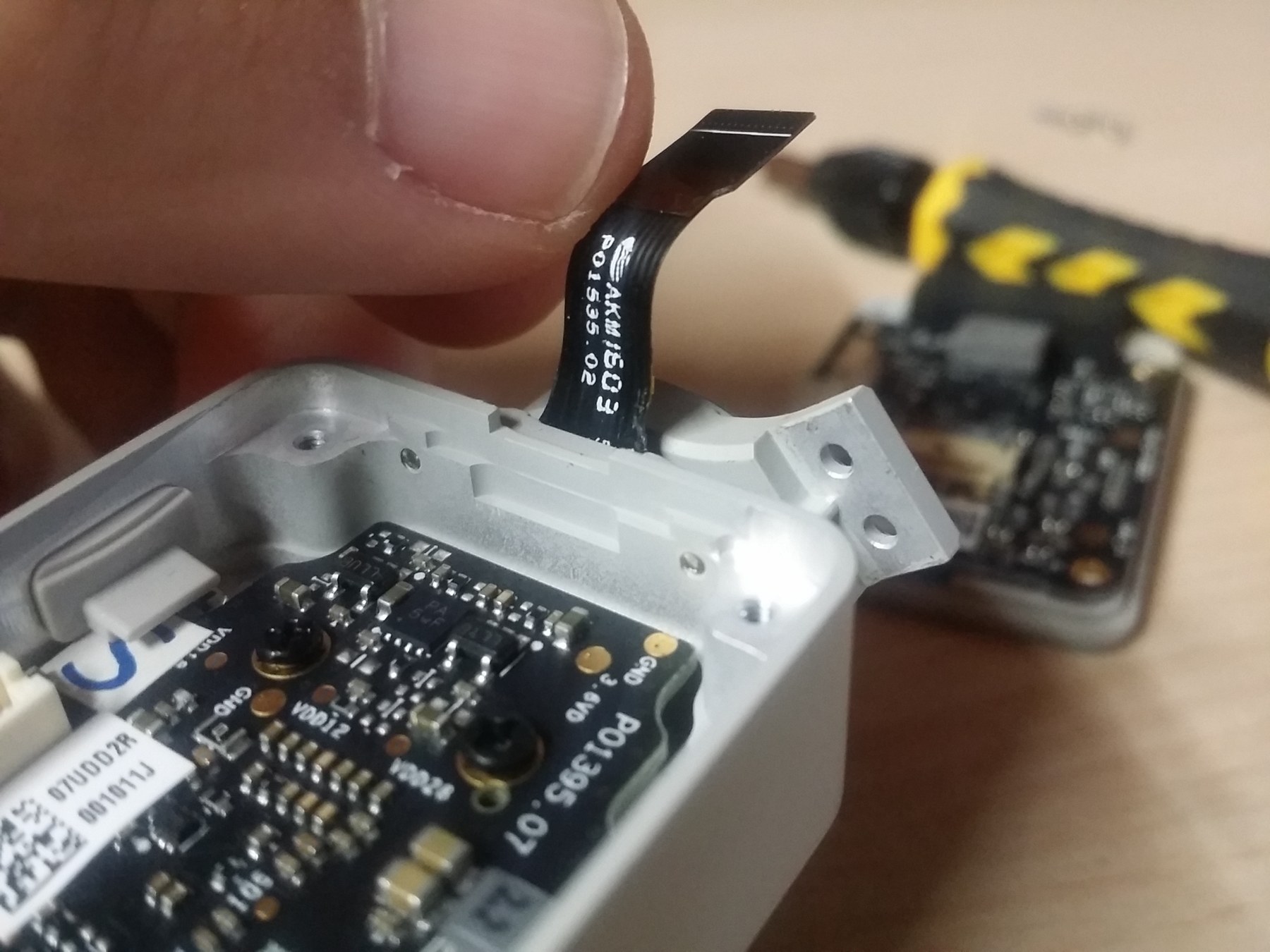
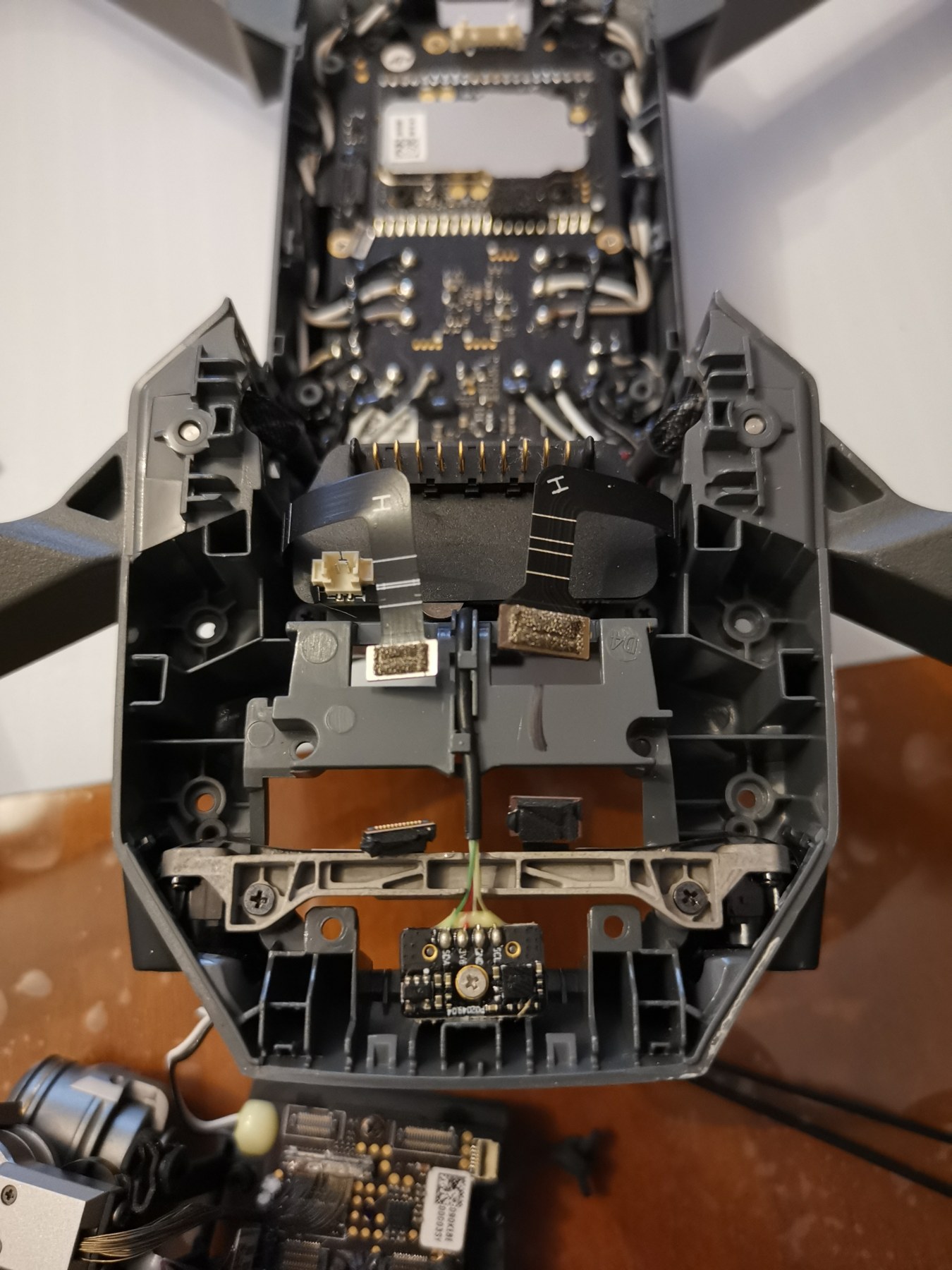
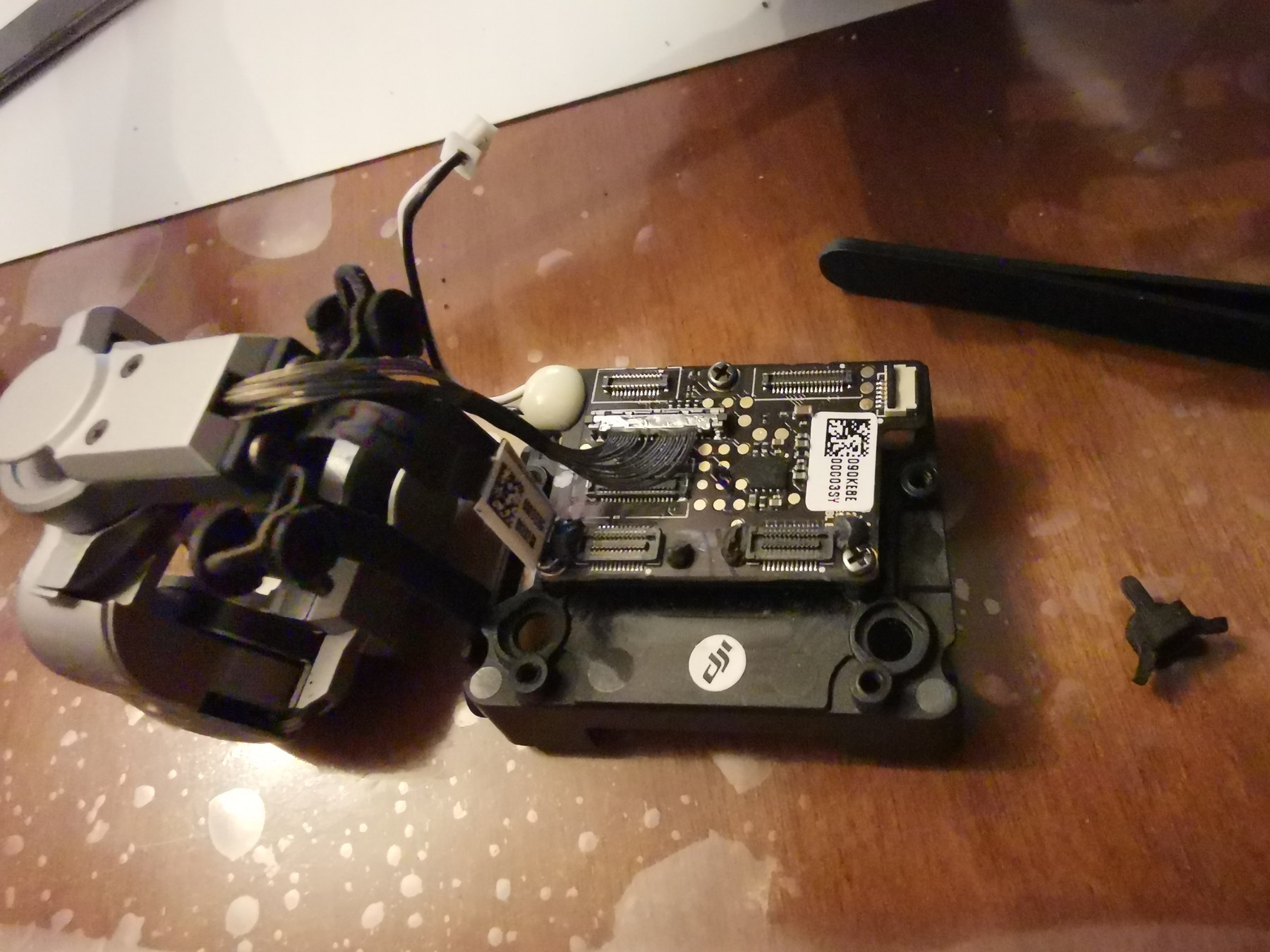
During one stage I also carried out repairs on consumer drones. Its plates, cameras, stabilizers and connections were more compact and integrated than those of my first setups, and in many cases they were more complex to intervene. Even so, the knowledge acquired building aircraft helped me diagnose faults, understand signal paths, and work with microelectronics components. The images from 2017 and 2020 preserve that facet of my career.
What technology has given us and what that time taught us
I would not change current equipment for those first multicopters. It would be absurd to deny the extraordinary progress we have made. Now I have much more precise tools, capable of obtaining photographs and aerial sequences with a quality that we could barely imagine then. But there is something about that time that I remember with nostalgia. The need to understand.
In the past, to get an aircraft to fly correctly, you had to know its limitations, understand its components, and learn how to solve problems. There was not always a solution available. There was no technical service capable of immediately solving all difficulties. On many occasions, if you wanted to move forward, you had to find the answer for yourself. That way of learning taught me patience, perseverance, observation skills and, above all, respect for technology.
It also taught me that a seemingly simple flight can hide a lot of preparation work. Today I still consider that the true value of an operator is not only in his ability to handle the controls. It is about understanding what you are doing, anticipating problems, making responsible decisions and knowing how to transform the possibilities of the aircraft into a useful and professional result.
A decade separates the images of this video. When I compare them, I see how much the tools I work with have changed: image quality, flight stability and autonomy allow me to take shots that were much more difficult before. I feel proud to have been part of that evolution, from the multicopters I built by hand to today's aerial filming equipment. And I thank those who have accompanied me during this path.
From experimentation to a professional career
Over the years, that hobby became a fundamental part of my professional life. Through Aeroview.es I have been able to unite two of my great passions: aeronautical technology and audiovisual creation. My experience as a photographer, especially in architecture and real estate, has allowed me to apply the knowledge acquired over all these years to the search for perspectives, framing and camera movements that provide true visual value.
I have also had the opportunity to work on sporting and nautical events, where flying conditions can be especially demanding. Filming moving vessels, working at sea or dealing with changing wind conditions requires more than knowing the functions of a modern aircraft. It requires judgment, experience, preparation and awareness of risks.
And when I remember my beginnings, I understand that a good part of that experience was born precisely from those tests, from the hand-built aircraft and from the mistakes that I had to learn to overcome. The evolution of drones has been extraordinary, but so has the evolution of those of us who began using them when they were still a rarity.
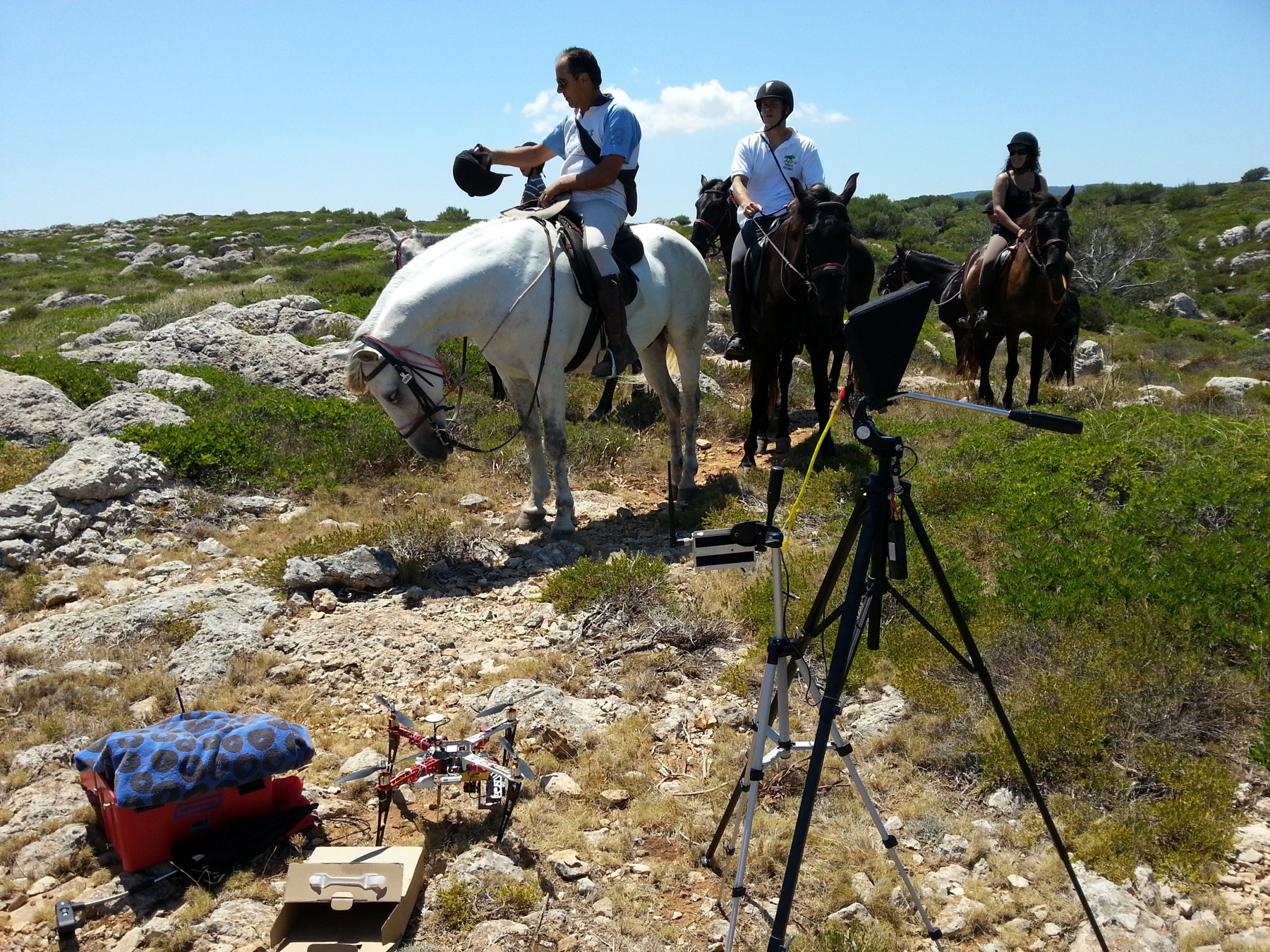
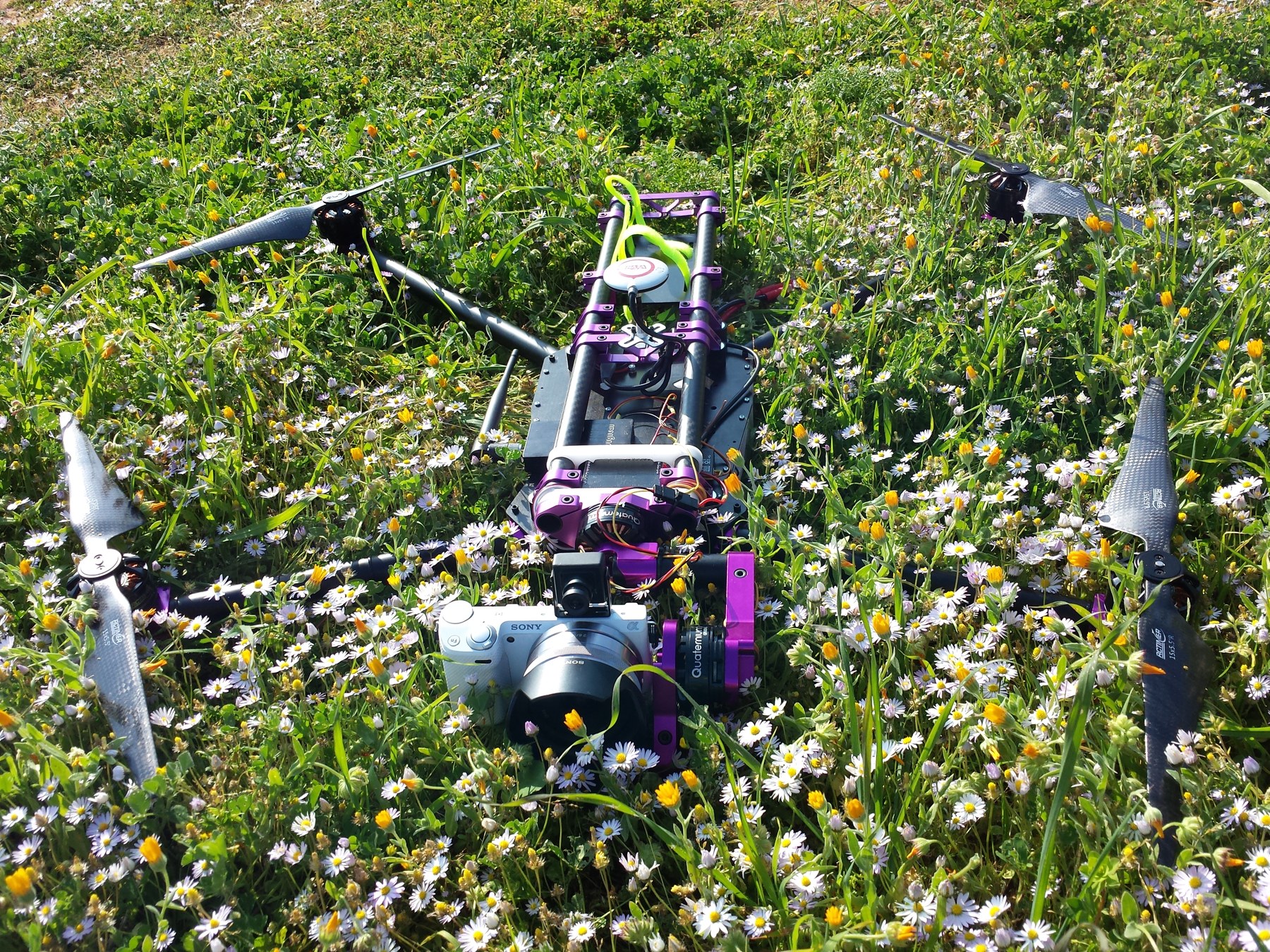
Tourism promotion filming and projects such as Quaternium were part of this evolution towards specific audiovisual applications. In the archive of 2013 and 2014, the preparation of work in the field and the testing of camera supports coexist: the workshop and the filming were still closely linked.
A look towards the future, without forgetting the past
From those first experiments in 1907 to today's intelligent multicopters, the history of these aircraft is an extraordinary example of human perseverance. What began as an almost impossible mechanical challenge ended up becoming a technological revolution. Today we talk about autonomous navigation, computer vision, artificial intelligence, automated mission planning and systems capable of analyzing the environment in real time.
On October 15, 2026, the presentation of the new Tesla Roadster brought back that feeling of seeing something that, shortly before, seemed like science fiction. Their brief aerial maneuvers using cold gas thrusters show a transfer of aerospace technology to the automobile. They are not sustained flights like those of a conventional aircraft, nor do they make the Roadster the first flying vehicle: projects such as Klein Vision's AirCar had already made full flights.
The technical reports in the presentation describe composite tanks capable of working with pressures of up to 10,000 psi and, for the experimental Rocket configuration, ten propellants and up to 600 liters of combined capacity. The interest of this solution lies in using pressurized gas to generate thrust and control short maneuvers. Its principle should not be confused with the final braking of a Falcon 9: the first stage of the rocket lands using its fuel engines, while the cold gas systems perform control functions.
Sustainability will be an essential part of any progress. A cold gas pulse does not require combustion in the nozzle, but compressing the gas consumes energy and manufacturing tanks, batteries and structures also has an impact. To evaluate these technologies, one must observe the complete system and its real use, in addition to the spectacular nature of a demonstration.
I imagine a future in which we will see interconnected aerial vehicles, capable of coordinating and taking us along corridors that will look like roads drawn in the sky. To make this possible they will have to recognize obstacles, maintain separations and coexist with the rest of the airspace. It is a vision that reminds me of Back to the Future and Doc's phrase: "Where we are going we don't need roads." That scene continues to represent the illusion of transforming an impossible idea into an everyday technology.
And I am convinced that there are still important transformations to come. But when I look at one of today's drones suspended with absolute stability in the air, I can't help but remember those first machines that I built with my own hands. I remember the soldering, the propellers, the interference, the hours of setup, and the days when it seemed impossible to get everything to work.
I remember the Menorca Aeroclub, the screens showing those aerial images for the first time and the people who approached fascinated to try to understand what we were doing. I also remember the aircraft that I lost and the sadness of knowing that I would never get them back. But, above all, I remember the excitement.
The same enthusiasm that led me to rebuild an aircraft after losing it, to look for a solution after each failure and to return to the flying field with the hope of achieving something new. Because for those of us who lived through those early years, a multicopter was never simply a device that could be bought in a store. It was the result of an idea, many hours of learning and a passion that allowed us to look at the world from a place we could not reach before.
And although aircraft today are very different, every time one of them takes off, a small part of that history continues to fly with me.
